I was just up in Canada this weekend participating in the Whistler Gran Fondo Forte cycling event. Whew…incredibly challenging, beautiful, and rewarding all packaged in 6 hours on my

Dated: June 26 2026
Views: 305
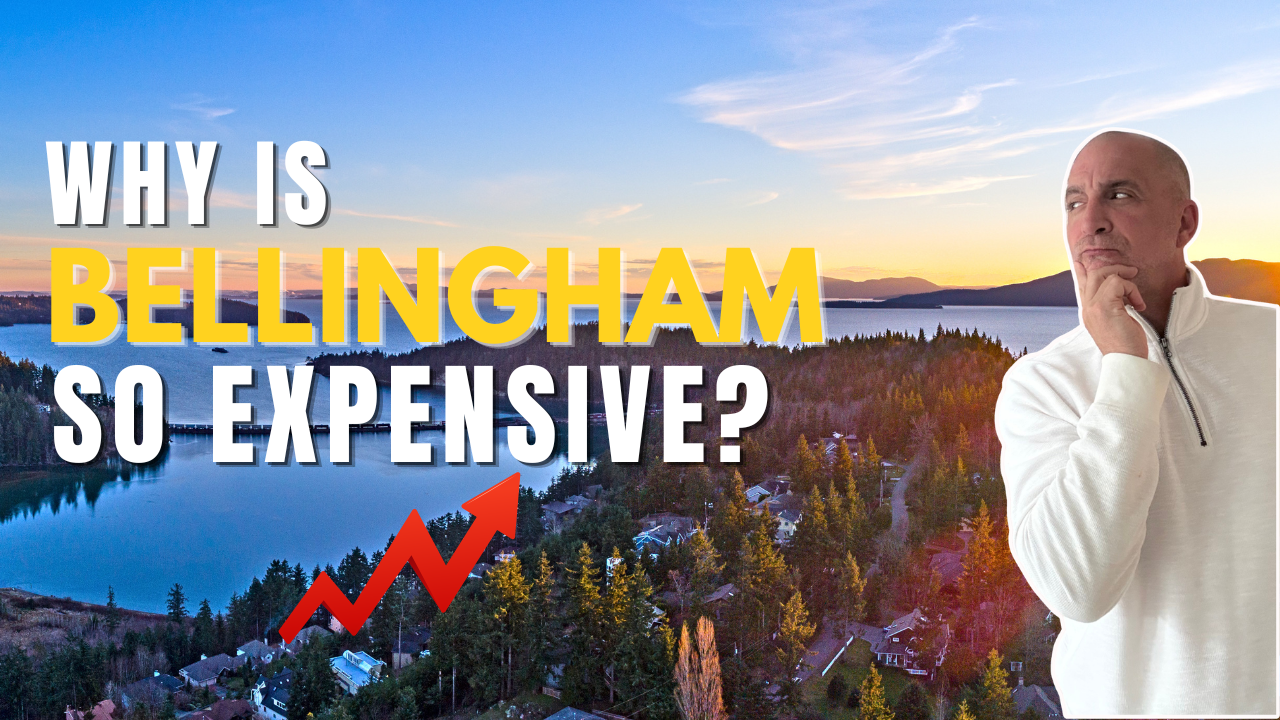
🎥. Watch the YouTube video here Why Is Bellingham So Expensive?
If you've ever searched "Why is Bellingham so expensive?", you're certainly not alone.
It's one of the questions I'm asked more than almost any other as a Realtor here in Whatcom County. Sometimes it's from people relocating from another state who are surprised by the price of housing. Other times it's longtime locals wondering how the city they grew up in suddenly became one of the most expensive housing markets in Washington.
The truth is, there isn't one simple answer.
Bellingham's housing market has been shaped by geography, lifestyle, economics, development regulations, migration, education, and decades of growing demand. None of those factors exist in isolation. Together, they've created one of the most desirable—and competitive—places to live in the Pacific Northwest.
I've lived in Bellingham since 1989, when I moved here to attend Western Washington University. Back then, Bellingham was still something of a hidden gem. People who lived here knew how special it was, but it wasn't widely recognized outside the region.
In 1994, I bought my first home on the south side of Bellingham for $109,000. A 2 bedroom, 1970s track home! The actual picture is in the video!
Today, that same home, with only modest updates over the years, is worth well over $650,000.
Watching that transformation firsthand has given me a unique perspective on how this market has evolved over the last three decades.
So how did we get here?
Let's break down the biggest reasons.
If you're looking for the short version, here it is:
Bellingham is expensive because demand has consistently outpaced supply.
But that supply-and-demand imbalance exists because of several underlying factors:
Each of these plays a role, and together they've created the market we see today.
Unlike many cities across the country, Bellingham can't simply keep expanding outward.
Look at a map, and it becomes obvious why.
To the west sits Bellingham Bay, one of the city's defining features and a major reason so many people want to live here.
To the south are the Chuckanut Mountains, whose steep terrain naturally limits development.
To the east lies the Lake Whatcom watershed, the primary drinking water source for the City of Bellingham. Protecting water quality is critical, which means development in and around the watershed faces additional scrutiny and regulations.
To the north and northeast, much of the surrounding land is preserved as productive agricultural land.
Those natural boundaries make Bellingham fundamentally different from cities like Phoenix, Dallas, or Boise, where growth can spread outward for miles in nearly every direction.
Here, land is finite.
As more people discover Bellingham, they aren't creating more land. They're competing for the same neighborhoods, the same homes, and the same limited opportunities that already exist.
That's one of the foundational reasons housing prices have continued to rise.
People rarely move to Bellingham by accident.
Most people first experience the community in one of four ways:
The outcome is often the same.
They fall in love with the lifestyle.
On any given day, you can ski at Mount Baker, mountain bike Galbraith Mountain, paddleboard on Bellingham Bay, hike the Chuckanuts, play golf, or spend the evening enjoying Fairhaven or downtown Bellingham.
Very few communities offer that variety within such a short drive.
Housing prices aren't determined only by square footage.
They're also determined by where people want to spend their lives.
Bellingham consistently attracts buyers who place a premium on outdoor recreation, environmental stewardship, education, and community character. That desirability creates steady demand, even during slower housing markets.
Simply put, people are willing to pay more to live somewhere they genuinely enjoy.
One of the biggest misconceptions I hear is that Bellingham's housing market is primarily competing with neighboring communities like Ferndale, Lynden, Blaine, or Birch Bay.
In reality, that's only a small part of the picture.
Bellingham sits almost perfectly between Seattle and Vancouver, British Columbia, making it attractive to buyers from two major metropolitan regions.
For someone selling a home in Bellevue, Seattle, or parts of California, Bellingham often feels surprisingly affordable.
A buyer arriving with equity from a $1.8 million Seattle home or a multi-million-dollar Vancouver property views our market very differently than someone who's lived here for decades.
That difference in purchasing power has had a measurable influence on housing demand.
The shift became even more pronounced during the pandemic.
As remote work became commonplace, people were no longer asking:
"Where do I have to live because of my job?"
Instead, they asked:
"Where do I want to live?"
Bellingham was perfectly positioned to answer that question.
It offered natural beauty, outdoor recreation, excellent schools, proximity to two international cities, and a slower pace of life.
For many remote workers, it represented the best of both worlds.
That migration didn't create Bellingham's affordability challenges—but it accelerated trends that were already underway.
If I had to point to one event that permanently changed Bellingham's housing market, it would be the COVID-19 pandemic.
But maybe not for the reason most people think.
COVID didn't suddenly make Bellingham desirable. People have been drawn here for decades because of the scenery, outdoor recreation, strong sense of community, and quality of life.
What changed was who could choose to live here.
Before 2020, housing decisions were largely dictated by employment. Most people lived where they worked.
Then, almost overnight, millions of workers discovered they could do their jobs from anywhere.
Instead of asking, "Where do I have to live?" people began asking, "Where do I want to live?"
For many, Bellingham quickly rose to the top of that list.
During the first year of the pandemic, I saw an overwhelming number of buyers relocating from the Seattle area. Employees from companies like Amazon, Microsoft, and other large employers suddenly had the flexibility to work remotely while enjoying a dramatically different lifestyle.
By the second year, the buyer pool had expanded even further. We began seeing more people relocating from California, Colorado, Oregon, and other parts of the country.
Many arrived after selling homes in markets where prices were significantly higher than ours. To them, Bellingham represented exceptional value.
To longtime local residents, however, those same prices felt anything but affordable.
The result was one of the most competitive housing markets I've experienced in more than two decades of real estate.
COVID didn't start Bellingham's affordability challenges.
It simply poured gasoline on a fire that had already been burning.
One of the biggest misconceptions about housing affordability is that builders simply choose to charge more.
The reality is far more complicated.
Before a single foundation is poured, developers and builders often face a long list of expenses that many buyers never see:
If a property is located within or near environmentally sensitive areas, such as portions of the Lake Whatcom watershed, those costs can increase even further.
Regardless of where someone stands on growth or environmental protection, these costs ultimately become part of the price of every new home.
Builders don't absorb those expenses indefinitely—they're reflected in the final sales price.
That's one reason newly constructed homes often carry higher price tags than many people expect.
Even when land is available and a builder is ready to move forward, another challenge remains:
Time.
Every month a project is delayed comes with real financial costs.
Property taxes continue.
Construction loans continue accruing interest.
Consultants still need to be paid.
Engineering teams continue working.
Contractors wait.
Schedules shift.
The longer the approval process takes, the more expensive each home ultimately becomes.
This isn't unique to Bellingham.
Communities across the country face similar challenges.
However, lengthy permitting timelines are part of the broader affordability conversation because every additional month increases the overall cost of delivering housing to the market.
When people ask why new homes seem so expensive today, this is one of the hidden factors that's often overlooked.
This may be the most challenging conversation of all.
As a community, many of us share two goals that can sometimes pull in opposite directions.
We want housing to be more affordable.
At the same time, we also want to protect the very things that make Bellingham special.
We value:
These priorities are part of what makes Bellingham such an incredible place to live.
But they also influence where and how future housing can be built.
There isn't an easy answer.
It's a balancing act that communities across the country continue to wrestle with.
Whether someone supports more growth, slower growth, or somewhere in between, it's important to recognize that these decisions affect both housing supply and affordability over the long term.
When people think about housing demand, they often focus on population growth.
But institutions matter too.
Western Washington University has played an enormous role in shaping Bellingham for generations.
Every year, thousands of students arrive from across Washington and beyond.
Some graduate and leave.
Many don't.
I know because I'm one of them.
I moved here in 1989 planning to attend college.
Thirty-five years later, I'm still here.
Faculty, staff, researchers, and graduates all contribute to the local economy, creating long-term demand for housing while supporting businesses throughout the community.
Universities don't just educate students.
They attract talent, create jobs, support local businesses, and often introduce people to communities they eventually choose to call home.
Western has done exactly that for decades.
Living just 20 minutes from the Canadian border creates a unique dynamic that many housing markets simply don't experience.
Over the years, I've seen periods where Canadian buyers have been very active in our market and other periods where activity slowed considerably.
Several factors influence that demand:
While Canadian buyers aren't the primary reason Bellingham is expensive, they've unquestionably been one of many contributing factors over the years.
Cross-border demand has always been part of Bellingham's unique housing story.
This is probably the second most common question I hear.
Will prices come down?
The honest answer is:
Possibly.
Real estate markets move in cycles.
Prices don't rise forever.
Markets cool.
They stabilize.
Sometimes values decline.
That's simply how real estate works.
But it's also important to distinguish between short-term market cycles and long-term fundamentals.
Those fundamentals haven't changed.
Bellingham still offers:
Those aren't temporary advantages.
They're permanent characteristics of the community.
That's one reason Bellingham has remained desirable through multiple housing cycles.
No one can predict exactly what the market will do next year.
But the reasons people continue wanting to live here aren't going away anytime soon.
Compared to many communities of similar size, yes. Bellingham's combination of limited land, strong demand, outdoor lifestyle, and proximity to Seattle and Vancouver contributes to higher home prices than many other parts of Washington.
Housing markets naturally experience cycles. Prices may stabilize or even decline during certain periods, but Bellingham's long-term desirability and constrained housing supply continue to support demand.
Many people are drawn by the area's outdoor recreation, quality of life, strong schools, natural beauty, and location between Seattle and Vancouver, BC. Others first discover the city through Western Washington University before deciding to stay.
That depends on your goals, financial situation, and timeline. Every market presents opportunities, and working with a knowledgeable local Realtor can help you determine the right strategy based on current conditions.
When people ask me why Bellingham is so expensive, they're usually hoping for one simple explanation.
After living here since 1989 and helping buyers and sellers for more than two decades, I can confidently say there isn't one.
It's geography.
It's quality of life.
It's limited land.
It's development costs.
It's remote work.
It's environmental stewardship.
It's Western Washington University.
It's our location between Seattle and Vancouver.
Most of all, it's because people genuinely want to build their lives here.
That demand has shaped Bellingham into the community we know today.
If you're considering moving to Bellingham or anywhere in Whatcom County, I'd be honored to help you understand not just the housing market, but the neighborhoods, lifestyle, and local knowledge that don't always show up in online searches.
Explore neighborhood guides, market updates, relocation tips, and local insights.
Thinking about moving to Bellingham? Here are a few more resources that will help you get to know the area.
🎥 Best of Bellingham & Whatcom County Series on YOUTUBE
🏡 Home Tours
See what different price points actually buy throughout Bellingham and Whatcom County.

Sean Hackney: Your Family-Focused Realtor® Specializing in Relocation, Listings, and Buyers in Whatcom and Northern Skagit Counties Greetings! I'm Sean Hackney, a devoted husband, father, and co-....
I was just up in Canada this weekend participating in the Whistler Gran Fondo Forte cycling event. Whew…incredibly challenging, beautiful, and rewarding all packaged in 6 hours on my
"Sean, I heard you can buy a house here with zero down. Is that actually true?"I get this question a lot from first-time buyers, especially the ones who moved up from Seattle or King County and are
"Sean, the builder says they'll buy down my rate — is that basically free money, or is there a catch?"I get some version of this question every time a buyer starts looking at new construction
You've found the view. The dock's in decent shape, the bulkhead looks solid, and you're ready to write an offer.Here's what I tell every buyer looking at waterfront property in Whatcom County before
 Claims of Copyright Infringement & Related Issues
Disclaimer:
IDX information is provided exclusively for consumers' personal noncommercial use,
that it may not be used for any purpose other than to identify prospective properties
consumers may be interested in purchasing, that the data is deemed reliable but is not
guaranteed by MLS GRID, and that the use of the MLS GRID Data may be subject to an end user
license agreement prescribed by the Member Participant's applicable MLS if any and as amended
from time to time.
The information contained in this listing has not been verified by NextHome Northwest Living and
should be verified by the buyer.
The database information herein is provided from and copyrighted by the
Northwest Multiple Listing Service (NWMLS). NWMLS data may not be reproduced or
redistributed and is only for people viewing this site. Listings that feature the
"three tree" icon are provided courtesy of NWMLS. All information provided is deemed
reliable but is not guaranteed and should be independently verified. All properties
are subject to prior sale or withdrawal. All rights are reserved by copyright.
Based on information submitted to the MLS GRID as of September 21, 2026 5:23 PM UTC. All data is obtained
from various sources and may not have been verified by broker or MLS GRID.
Supplied Open House Information is subject to change without notice.
All information should be independently reviewed and verified for accuracy.
Properties may or may not be listed by the office/agent presenting the information.
Some IDX listings have been excluded from this website.
Copyright 2026 Northwest Multiple Listing Service. All rights reserved.
